

Solid State Logic SSL Odyssey
Solid State Logic SSL Odyssey
Solid State Logic SSL Odyssey
Introducing ODYSSEY
SSL's Odyssey console overcomes the performance, audio, power and ergonomic compromises that challenged earlier digitally controlled analogue designs by using innovative ergonomics and patented actively controlled SuperAnalogue processing, SSL’s revolutionary ‘ActiveAnalogue™’ electronics. These circuits retain the audio character and response of traditional hands-on analogue hardware and couple with 21st century analogue signal processing, ultra-precise adjustment and network control to provide a seamless ‘analogue’ session experience, with the huge benefit of switching projects and all settings at a moment’s notice.Odyssey looks, sounds and feels like a classic analogue SSL, but now with truly Total Recall and Instant Reset!
- New large format analogue console from SSL available with multiple standard and custom frame variants
- Fully featured channel processing, including In-line twin path design, EQ, Dynamics, Per Path Inserts and Direct Outputs
- Patented SSL ‘active analogue’ technology provides instant session recall
- Discrete control surface allows fast, easy to use, session workflow
- Analogue circuits mean no latency or digital sync issues for smooth tracking sessions
- Powerful channel signal architecture provides flexible record, overdub or mix use
- Integrated DAW control for smooth hybrid workflow
- Active processing control allows session preparation off-line to optimise studio time
- Flexible, modular construction allows compact frames for smaller installations up to massive surface for the largest control rooms.
- Incredibly flexible monitoring provides multiple stereo and immersive mix creation options
- Full project compatibiliy with SSL's Oracle console.
With the ability to instantly switch between mix or tracking set-ups, change the session’s work in less time than it takes the artist to switch sequence tracks, Odyssey's Active Analogue technology changes the throughput of any analogue centric production facility. When combined with no need to worry about technical hinderances such as signal latency, digital clipping and sample frequencies, Odyssey delivers the warm, smooth production experience an analogue studio should provide, while having the ability to change direction at the pace a modern production process demands.
Welcome to future analogue...
 MORE INFO
Odyssey is the culmination of everything SSL has learned about analogue control, workflow, and sound, distilled into a single, uncompromising vision. Powered by SSL’s ActiveAnalogue™ technology, it takes the revolutionary philosophy of Instant Recall, first realised with Oracle, and expands it into a no-limits modular console where creativity moves at the speed of thought.
For decades, the power of a traditional in-line analogue console has been limited by a fundamental constraint: complex sessions take time to reset, revisit, compare, and revise. Odyssey removes that barrier. Complete analogue console states can be restored, compared, revised, and switched in an instant, making full mix A/Bs, alternate balances, artist-led changes, and revisions feel immediate rather than disruptive.
Available from mid-size 24+8 channel configurations to colossal 96+8 channel systems, with straight, curved ProStation, and fully custom frame options, Odyssey takes the Future Analogue experience beyond the event horizon — opening a new creative space where tracking, mixing, and revision-led production will never feel the same again. Entirely analogue in sound and feel, it allows engineers to move at the pace of the music, the artist, and the moment, without sacrificing the scale, depth, or authority of SSL.
Every channel features a complete suite of fully analogue, recallable tools — PureDrive™ mic pres, dynamics, switchable E/G Series EQ, and assignable Filters — placing SSL tone-shaping power directly under the engineer’s hands. A true in-line architecture with motorised Large and Small Faders provides immediate control of multiple signal paths, supporting fast, fluid movement throughout the production process.

Powered by SSL’s ultra-high-performance ActiveAnalogue™ circuitry, housed in dedicated processing racks, Odyssey delivers the sonic quality expected from a flagship analogue SSL console. From pristine, reference-grade accuracy to warm, driven tones, Odyssey gives engineers a wide analogue palette, capable of precise, transparent production as well as colour and character when the music demands it.
Odyssey’s centre section is the command hub for the entire production environment, bringing mix control, Stereo Groups, VCAs, bus processing, monitoring, foldback, communications, and DAW transport into one powerful workspace. From managing multiple Main Mix Buses and stereo group paths to shaping the final mix, building artist feeds, checking sources, controlling talkback, and switching monitor systems, it keeps the critical decisions of a session directly under hand. Flexible monitoring supports multiple speaker sets, external sources, foldback feeds, solo/listen workflows, and third-party immersive systems such as a Dolby Atmos renderer, allowing stereo and spatial productions to be controlled from the main listening position.
The O-Control Application Suite provides online and offline tools for Odyssey (and Oracle) configuration, session preparation, and project management on Windows and macOS. Projects, Presets, Snapshots, processing sections, metering, fader positions, and cut/solo status can be prepared, inspected, and managed from software, helping complex sessions start faster and stay organised.
With advanced DAW control assignable ‘per-bay’ and O-Motion automation, Odyssey connects analogue console operation to familiar DAW workflows, allowing console moves to be recorded, edited, and replayed with the precision modern production demands.
 Key features:
- Future Analogue console for large-scale tracking, overdub and mixing sessions
- ActiveAnalogue™ Instant Recall technology for unparalleled efficiency
- 4x Stereo Mix Busses, 16 Track Busses, 10 Aux Busses, 8 Stereo 'Flex' Groups, 3 Stereo Foldback buses
- Modular design, available with 24+8 to 96+8 channels, straight, curved ‘Pro Station’, and custom frame configurations
- High-performance PureDrive™ mic pres. w/ ‘Drive’ control
- SSL Channel Dynamics: Compressor/Limiter, Gate/Expander
- SSL 4-Band parametric EQ with switchable E/G Series curves and Q-characteristics
- Assignable High and Low Pass Filters and Insert Points
- Premium 60mm motorised Small Fader and a 100mm Large Fader
- Integrated THE BUS+ and Analogue Dynamic EQ processors
- Flexible monitoring provides multiple stereo and immersive mix options
- Insightful VU or Plasma ‘style’ metering with dynamic ‘Detail View’
- Advanced DAW control, assignable ‘per-fader-bay’
- O-Motion Plug-in Dynamic Automation System
- O-Control Application Suite: On/Offline tools for session prep and console configuration
- 13U 19” rack(s) houses all analogue circuitry and can be located remotely, within the control room, or under the console
Console Surface
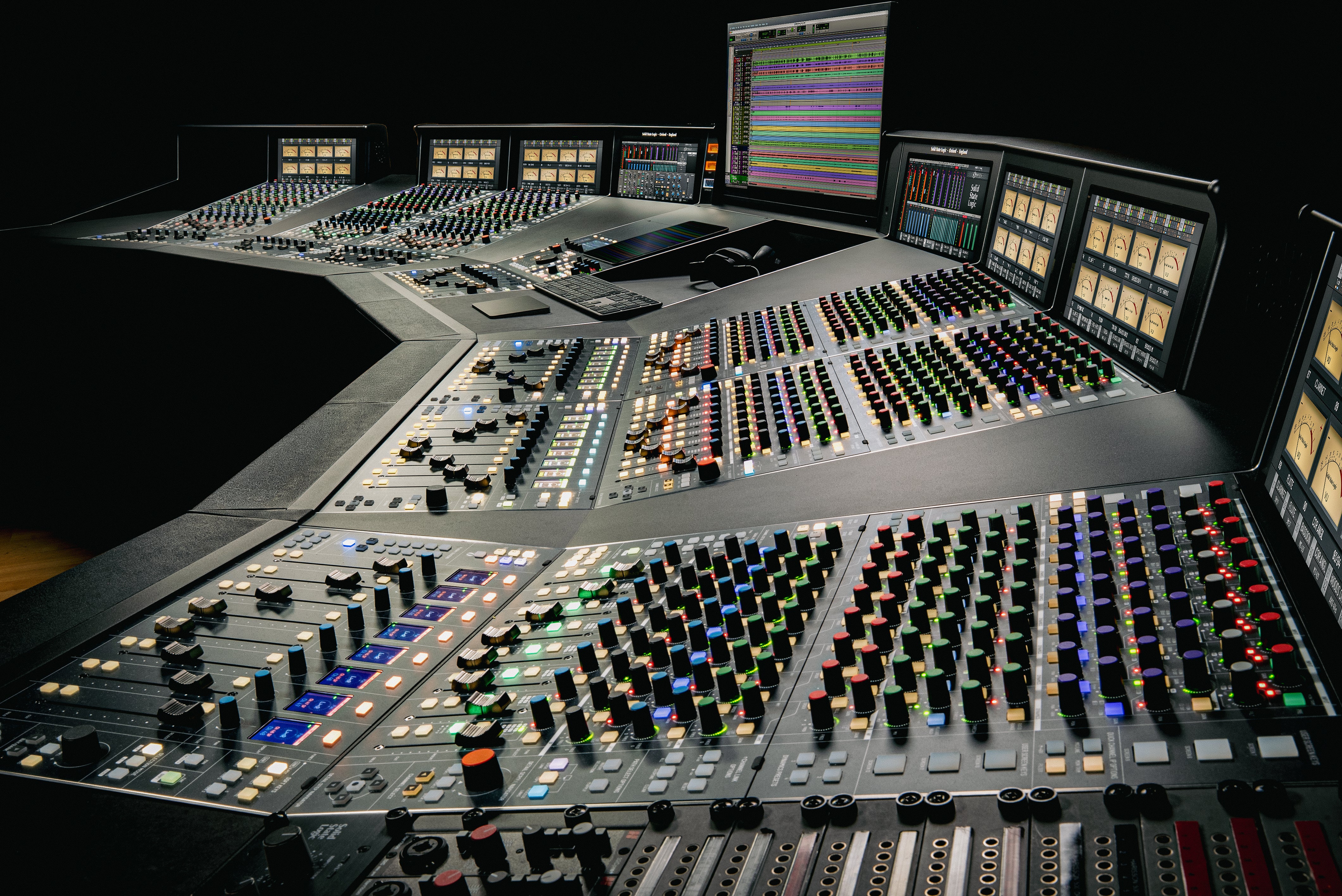
Odyssey’s 8-channel bay layout is designed to empower operators at every stage of the production process. Each channel provides dedicated hands-on control of its analogue toolset — Mic/Input gain, Aux sends, Dynamics, four-band parametric EQ, High and Low Pass Filters, a 60 mm motorised Small Fader, and a 100 mm Large Fader — keeping critical moves immediately under hand, not buried in menus.
Flexible surface control allows any channel settings to be accessed from a central listening position. Associated switches sit between the rotary controls for intuitive access to EQ band selection, Aux send on/off, and other key functions, with additional routing and utility controls positioned to the left and right of each bay.
The result is a highly approachable surface that keeps essential controls instantly accessible, with a shallow front-to-back depth to reduce reach and support comfort during long sessions.
ActiveAnalogue™
ActiveAnalogue™ technology gives Odyssey the feel and response of a traditional analogue SSL console, with the operator unaware that ultra-precise digital control is behind every move. With 16,000-step resolution across all controllable parameters, engineers get the immediacy of hands-on analogue operation with the accuracy required for precise recall and perfectly repeatable settings.
Channel Strip
 Odyssey’s channel strip is based on classic SSL in-line architecture but evolved for the latest workflows. Each channel provides separate record and monitor paths, with independent input gain, output level control, and processing routing.
Both paths feature independent, switchable, and moveable Insert points. Independent Direct Outputs on each path allow analogue sources, processed signals, stems, or individual tracks to be captured directly into the DAW, preserving the full character of the signal chain while supporting lightning-fast hybrid workflows.
Dynamics Processing
 Odyssey’s fully analogue, instantly recallable channel dynamics carry forward SSL’s legacy in compression, limiting, gating, and expansion — bringing the tools that helped shape the sound of generations of records into the Future Analogue workflow.
The Compressor/Limiter features signal-dependent Attack with Fast Attack switching, plus RMS or Peak sensing for smooth gain control, punch enhancement, or more characterful compression and limiting, with dedicated Wet/Dry Mix for parallel compression directly within the channel. Alongside it, the Expander/Gate offers Inf:1 Gate and 2:1 Expansion modes with signal-dependent Attack, Fast Attack, and variable Range, Threshold, Release, and Hold controls
Odyssey’s sidechain can be routed as an independent processing resource, linked from the same or alternate channel path, triggered from the Insert Return, or shaped using the channel Filters and/or EQ. From de-essing and frequency-dependent compression to keyed gating, focused expansion, and creating dynamic movement, Odyssey gives every channel the precision, attitude, and musical response that makes SSL dynamics a studio essential.
E & G Series EQ
Each channel features a fully analogue four-band parametric EQ with switchable E and G Series characteristics, giving engineers access to two classic SSL tone-shaping voices. E Series delivers bold, assertive presence and edge, while G Series offers broader, more refined musical control. Selectable HF and LF shelf/bell curves and switchable mid-band Q behaviour provide the precision for everything from subtle correction to decisive creative shaping.
The EQ can be instantly assigned between the Small and Large Fader paths, keeping tone-shaping fluid across tracking, overdubbing, and mixing.
Mono & Stereo Channels
Channels operate as powerful mono strips by default or can be linked in odd/even pairs for stereo operation, providing a single, streamlined control set for paired sources such as keyboards, drum machines, external instruments, stereo effects returns, sub mixes, and stems. Linked channel pairs are ‘matched’ to within a hundredth of a dB, enabling exceptionally precise stereo-matched mic gain, EQ, and dynamics processing — preserving the true balance, depth, and detail of the stereo image.
Channel Meters
Each Odyssey bay features a shallow dedicated display that keeps critical channel information clearly visible. Track names, bus routing, channel metering, and labels for both Large and Small Fader paths sit directly above the controls, giving engineers instant visual feedback across complex in-line workflows.
Metering can be switched between VU. Routing displays show Main A, B, C and D assignments, Aux bus status, stereo Aux pairs, and 16 Track Bus routing, with colour-coded indication for Small Fader and Large Fader paths.
Channel Detail View
The Channel Detail View gives engineers an at-a-glance understanding of exactly how each channel is configured, including all parameters for both Large and Small Fader paths. Integrated with the Navigator, it enables fast “scroll and control” access to processing, switch functions, and signal routing — making complex channel setups easier to inspect, adjust, and manage in real time.
TouchView
TouchView mode provides an immediate, per channel graphic display of whatever controls in a processing section in the channel is being touched. So, for example, adjusting an EQ control immediately present the user with a familiar EQ section image in the meter display above the relevant channel. This displays in parallel when multiple channel controls are touched across the surface providing an additional convenient way to view channel settings that works alongside surface controls.
Navigator Controls
Odyssey places the controls engineers use most directly under hand, while maintaining a console footprint that works across the diverse control room sizes of modern studios. Dedicated surface controls provide fast, tactile access to core processing, with generous spacing and reduced front-to-back depth for easier operation over long sessions.
For deeper control, Odyssey’s displays and Navigator system give clear access to advanced processing parameters, switch functions, and signal routing. The result is a surface that feels immediate and uncluttered yet unlocks the full depth of the Future Analogue console whenever it is needed.
Centre Section
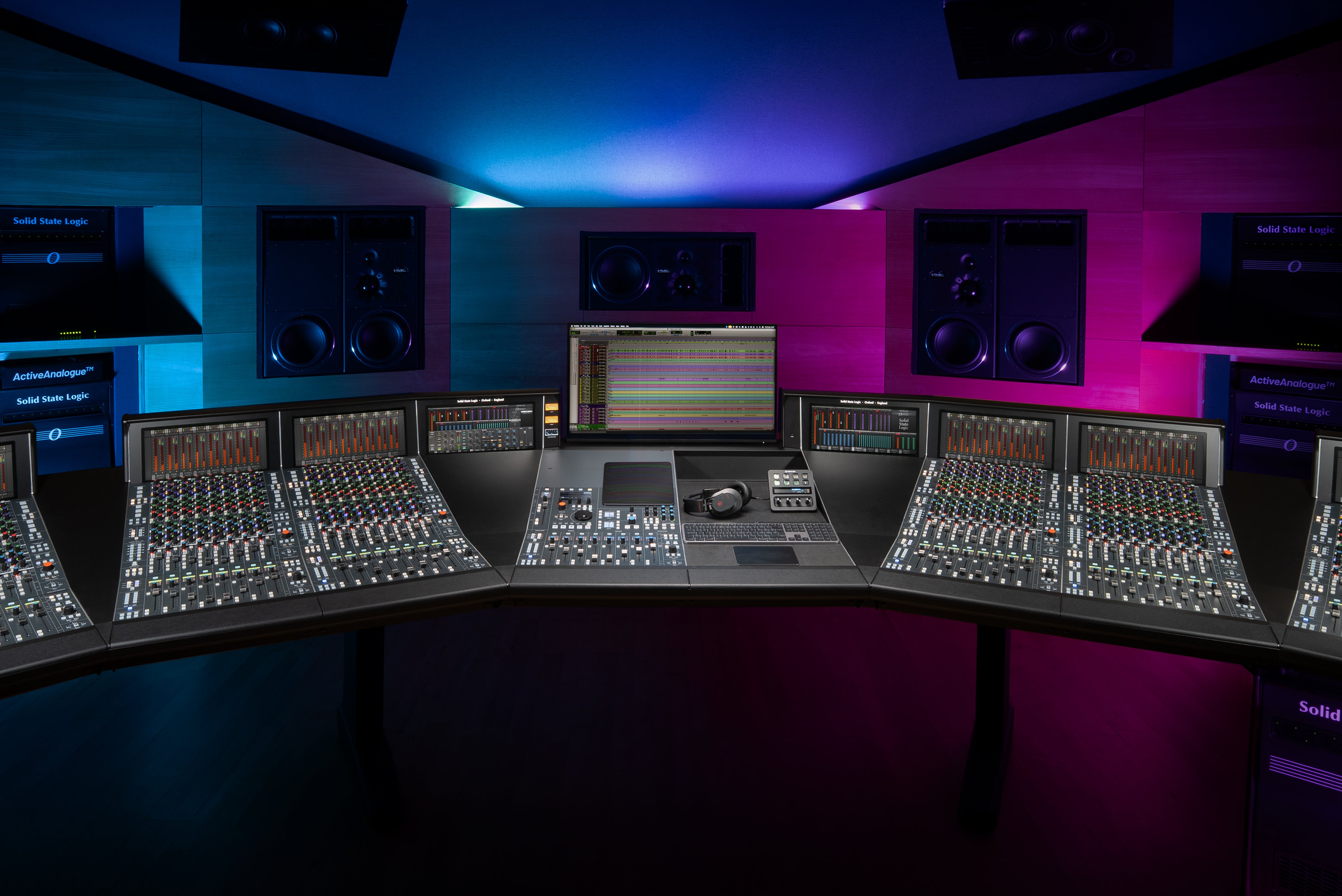
 Odyssey’s centre section brings the console’s mix, monitoring, and control functions into a powerful, highly configurable workspace. It provides main level control for all buses, monitoring and foldback tools, eight fader-controlled Stereo Group Inputs, and up to 24 VCA control faders for managing multiple path levels directly from the centre of the console.
A 100 mm motorised Main Fader can control any of the four Main Mix Buses, with dedicated metering, AFL, insert switching, and fine balance adjustment for managing bus processing and mix output with precision.
A large central LCD provides access to Main, Track, and Aux Bus control, Foldback levels, and detailed position feedback, while dedicated surface controls provide immediate operation of Dynamic EQ, the Bus Compressor, Main Bus processing, DAW transport, jog/shuttle, Talkback, Listen, Monitor selection, Foldback, and Solo functions. Tablet/controller space with USB-C power keeps additional studio tools close at hand, supporting a centre section that is powerful, adaptable, and designed around the way modern control rooms operate. (Devices shown in the image are not included)
Each Stereo Group Input can pick up the 16 Track Buses in pairs and includes Image control, a switched insert, dedicated direct output, and routing to the Track, Aux, and Main Mix Buses — making it easy to process, route, recombine, and capture stereo groups, stems, and submixes directly from the console all with phase coherence to the source and other mix busses in the console.
Thanks to Odyssey’s modular design, the centre tile can be positioned closer to the centre faders or moved higher towards the meter bridge, creating space for a wireless keyboard or trackball between the centre controls and faders. Double-wide custom centre sections are also available, adding surface area for expanded control layouts, Stream Decks, and other studio accessories.
Centre Section Detail Views
 Detail Views are available for Odyssey’s Centre Section processing and routing, giving engineers focused access to the console’s central mix and control functions. When opened, the main meters automatically resize so output bus metering remains visible, keeping critical level information in view while deeper processing controls are adjusted.
Bus Architecture
Odyssey’s bus architecture gives engineers exceptional routing flexibility for tracking, mixing, stems, cue mixes, parallel processing, and hybrid workflows. With 34 mix buses available to every channel, Odyssey provides 16 Track Buses, 10 Auxiliary Buses, and four stereo Main Mix Buses — Main A plus additional B, C, and D buses.
Odyssey’s 10 Aux Buses can operate as individual mono sends or be linked in odd/even pairs to create up to five stereo Aux Buses, ideal for foldback, effects sends, submixes, and stems. Each Large and Small Fader path can route independently or simultaneously to any combination of buses, allowing complex stem structures, alternate outputs, and parallel mixes to be built directly from the console.
The four stereo Main Mix Buses provide flexible destination options, with B, C, and D available for independent mixes, alternate versions, or parallel processing before summing to Main A. Odyssey also integrates THE BUS+ within the centre section.
THE BUS+, Analogue Dynamic EQ, and more
 THE BUS+ is a modern-day classic that takes the glue & punch of the G Comp into the future. Offering four modes of operation, LOW THD, Feed Back, and ‘4K’ Saturation Modes, along with sought-after analogue processors such as Dynamic EQ, Transient Expander, and much more. Odysseys integrated THE BUS+ adds exceptional power to the console's sonic capabilities and is fully recallable thanks to ActiveAnalogue™ technology.
Monitoring & Foldback
Odyssey’s monitoring system continues SSL’s tradition of powerful studio control, supporting multiple control room monitor sets, three independent Foldback feeds, a surface headphone output, and four stereo external source inputs. A dedicated surface stereo input also allows quick connection of instruments, playback devices, or third-party Bluetooth receivers for fast reference playback from phones or tablets.
Console-wide Listen controls provide After Fade, Pre Fade, Solo In Front and Solo In Place monitoring from channels, Stereo Group Inputs, and buses, while the Studio Foldback section can source from Aux Buses, external inputs, and console monitoring paths to create flexible headphone mixes or playback feeds. Talkback and Studio Listen functions can be controlled from the surface or remotely, with support for third-party headphone mix systems.
Immersive Monitoring
For immersive production, Odyssey can hand monitoring control to an external system such as a Dolby Atmos renderer, working alongside the DAW’s Object panning and path inserts to enable analogue-processed channel path feeds to be monitored through an immersive mix environment from the main console listening position.
Track and Aux buses
Odyssey’s 10 Aux Buses can be configured as mono sends or linked in odd/even pairs to create stereo sends, allowing the console to adapt to the needs of each session. Complex tracking setups can combine multiple stereo foldback mixes with mono effects sends, while mix sessions can use stereo Aux paths for parallel processing alongside mono sends for reverbs, delays, and external effects.
For greater routing flexibility, Aux 9 and 10 can feed the Track Buses via the channel’s internal EFX bus, allowing multiple channel groups to be built under independent fader control. These can be returned through the Stereo Group Inputs for insert processing, stereo image control, and precise level management.
Odyssey’s 16 Track Buses can be fed from either the Large or Small Fader paths, with routing available in mono or as stereo odd/even pairs following the channel’s mix-bus panning. This gives engineers fast, flexible ways to create stereo groups, stems, alternate outputs, and complex mix structures directly from the console.
Stereo Group Inputs
Odyssey provides eight flexible, fader-controlled Stereo Group Inputs for creating stems, submixes, parallel processing paths, and alternate mix versions. Each Stereo Group can pick up the 16 Track Buses in stereo pairs, and includes Image control, a switched insert, dedicated direct output, and routing to the Track, Aux, and Main Mix Buses.
For advanced stereo processing, Image control can operate as an MS encoder before the insert, allowing Mid and Side signals to be processed independently, with selectable MS decode after the insert return. This makes it easy to process, route, recombine, and record stereo groups, stems, and submixes directly from the console.
DAW Control
Odyssey integrates advanced DAW control into the architecture of the console, giving engineers hands-on command of both analogue signal paths and workstation sessions from a single, unified surface. With the FOCUS key, each 8-channel bay can be independently switched between analogue processing and DAW control, allowing analogue and DAW workflows to sit side by side across the console.
Engineers can ride DAW tracks, navigate large sessions, control key workstation functions, and shape analogue channels without leaving the listening position or interrupting the mix. Powered by SSL 360°, Odyssey brings modern DAW control into a flagship analogue console workflow — preserving the scale, feel, and purpose of the console while expanding what can be controlled from the surface.
Immersive Production
Odyssey can integrate with third-party immersive monitoring systems, including solutions such as the Dolby Atmos Renderer, placing spatial monitoring control directly on the console surface. Configured via O-Setup and activated from the monitoring section, Odyssey can mute its own analogue stereo monitoring and pass control commands to an immersive audio renderer.
Combined with Instant Recall, this gives engineers a faster, more repeatable way to manage complex immersive sessions — from switching monitoring environments to revisiting Atmos mix revisions with consistency.
O-Control Session Management
 The O-Control Application Suite comprises the following set of applications:
-
O-Setup: Manages the console settings
 - O-Session: Manages the saving/loading of Projects, Presets, Snapshots as well as control and inspection of console processing sections.
 - O-Overview: Shows an ‘overview’ of the console channels, including metering, large and small fader positions and cut/solo status.
The O-Control Application Suite provides online and offline configuration, control, and session management for Odyssey and Oracle consoles on Windows and macOS. Used connected to the console or stand-alone, it enables project information to be created, edited, updated, and prepared before the session begins — reducing setup time and bringing greater structure to busy studio workflows.
O-Setup manages console settings, including all gain, routing, and processing. O-Session handles Projects, Presets, Snapshots, and processing-section control, and O-Overview provides channel-wide visibility of metering, Large and Small Fader positions, and cut/solo status. Together, they give engineers and studio teams the tools to configure faster, manage sessions with efficency, and keep complex productions clearly organised.
O-Motion Automation System
O-Motion brings Odyssey and Oracle console automation directly into the DAW, allowing engineers to write, play back, and edit console parameters using familiar Pro Tools automation playlists or Logic Pro lanes. Built on SSL’s industry-leading legacy of advanced console automation, it combines hands-on control with the precision, flexibility, and familiarity of editing automation in a DAW.
Using O-Motion DAW Plug-in, control changes made on Odyssey are recorded into the DAW, where they can be edited, copied, trimmed, tempo-synced, and reorganised like any other automation data. Each plug-in instance can be assigned to any console Channel, VCA Group, Aux, Stereo Group, or Main bus.
Standard, ProStation, and Custom Configurations
Odyssey is available in standard, ProStation, and fully custom configurations, allowing each console to be tailored to the ergonomics, workflow, and architecture of the control room. Standard straight-frame configurations include 24, 32, and 48 channels, with larger 64, 72, and 96-channel systems available for facilities requiring greater scale.
For enhanced operator focus and reach, Odyssey can also be specified as a curved ProStation, bringing the console surface naturally around the listening position. Custom frame configurations are available with 15° or 25° angled sections, enabling studios to create the ideal console shape for their room layout and working style.
ProStation and custom configurations can also be specified with a split meter bridge over the centre section, allowing DAW screens to be positioned lower and closer to the operator. This creates a more integrated production environment, improving sightlines, reducing reach, and keeping console control, session navigation, and screen-based workflows comfortably aligned.
ActiveAnalogueTM Processing Racks
 Odyssey systems typically use between two and five dedicated processing racks, depending on specification: one for Centre Section processing and one to four for channel processing. Housing the analogue processing in dedicated racks keeps the console surface focused, ergonomic, and comfortable, while supporting scalable system design, easier servicing, improved thermal management, and long-term reliability.
Racks can be located remotely from the surface, floor-mounted, rack-mounted, or installed in the control room or a separate machine room. Active cooling maintains consistent performance, while an acoustic noise floor below NR25 supports flexible installation with minimal impact on the listening environment.
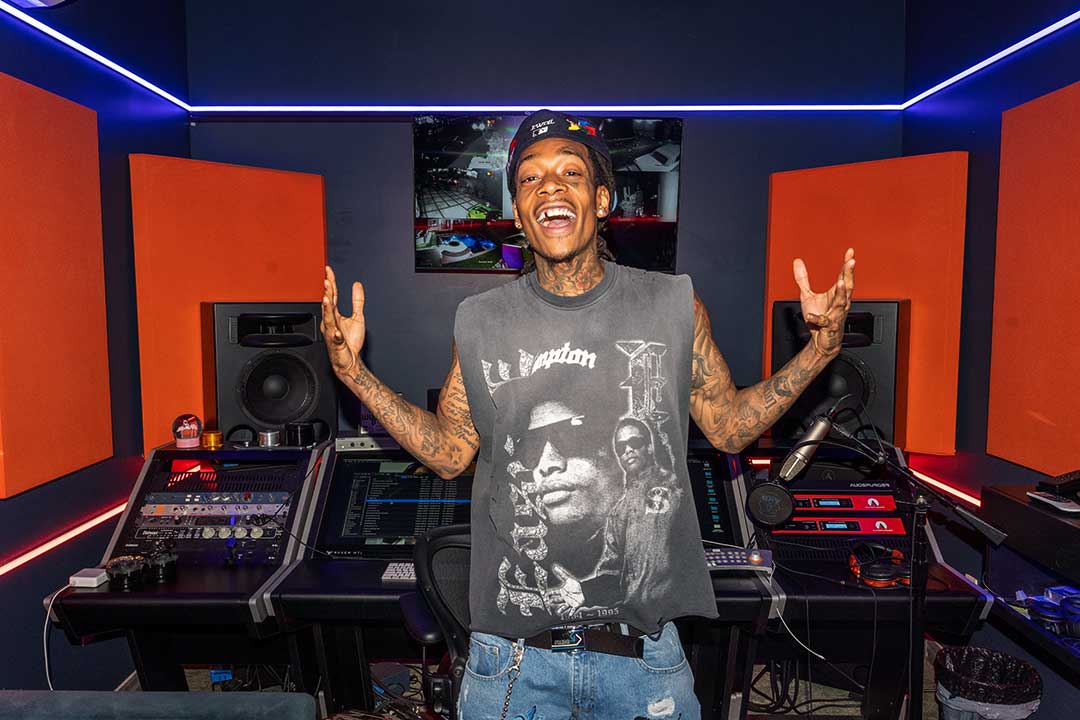
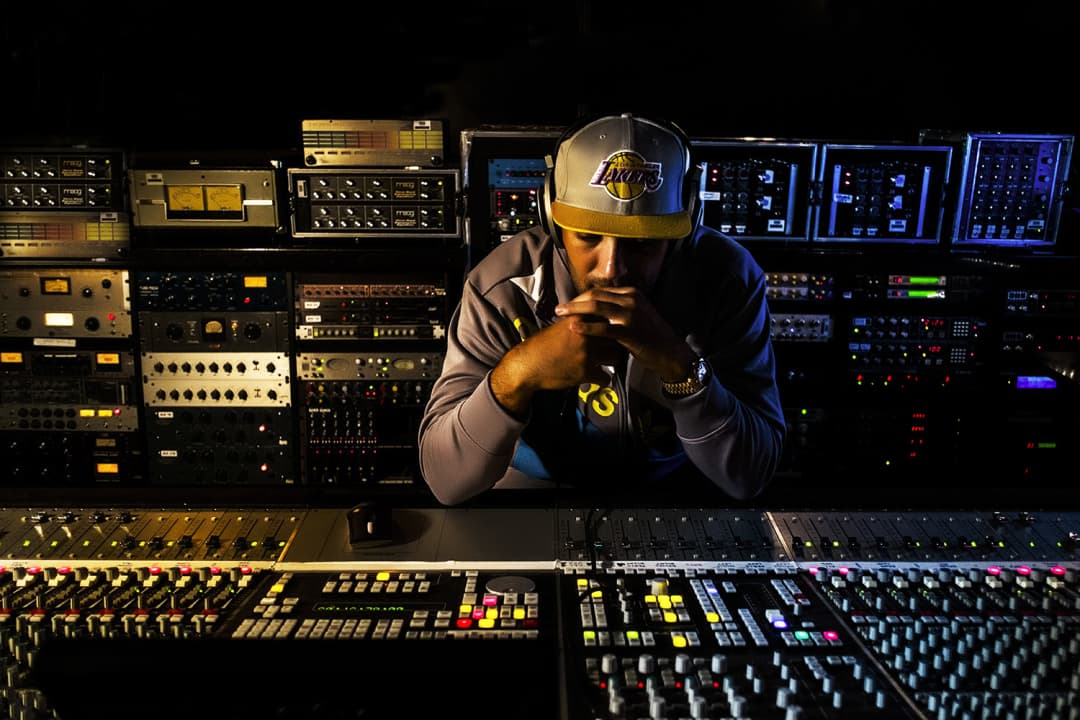
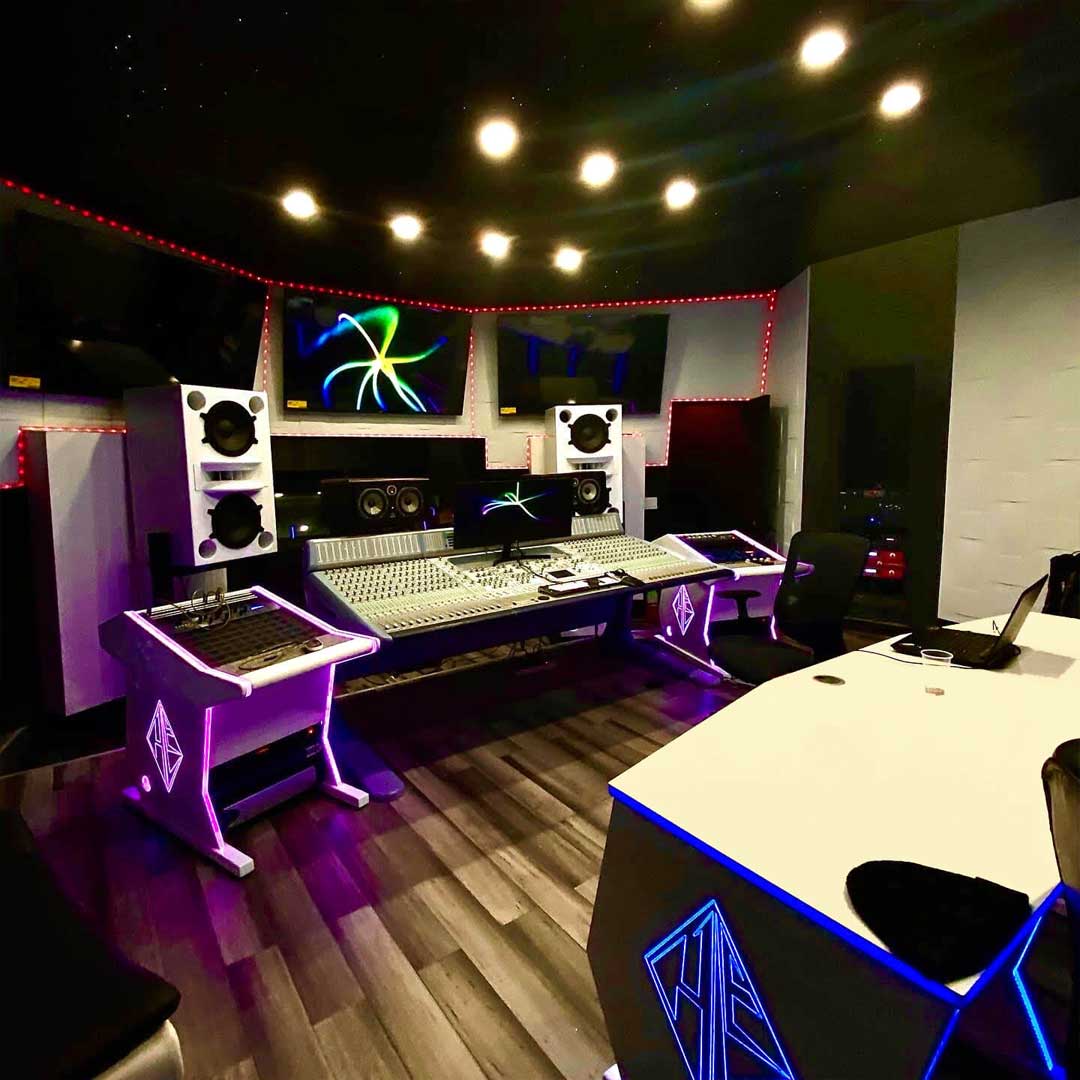
Check out our featured projects





FAQS
Have a question?
Our Customer support is available Monday to Friday, 8 - 10 est. Contact us with your questions or to get a quote request.
Extended Warranty
Get up to a 2-year extended warranty on any new gear and up to a 1-year extended warranty on used gear.
PAD-Certified preowned gear
All of our used equipment goes through a rigorous testing and servicing process before we make it available for sale.
Best Price Match
We guarantee the lowest price, period. If you need a price match, call us at 1-877-223-8858 for details.
Expert Advice
The PADTech team knows the gear inside and out. If you need help with installation, configuration or repairs, call us. We can help